
PERMAFROST MONITORING
Understand what’s changing beneath your infrastructure.
Monitor ground temperatures at multiple depths along railways, roads, pipelines, bridges and building foundations. Combine temperature histories with weather data and available soil data to identify changing permafrost conditions and locations needing closer assessment.
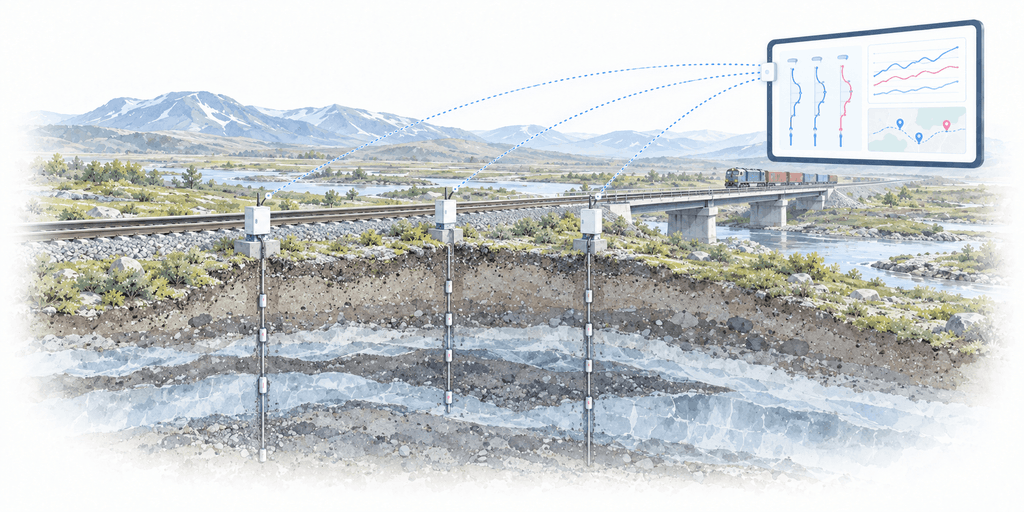
Turn ground temperature readings into a clearer picture.
Follow temperature changes at different depths, compare monitored locations and use historical trends to support infrastructure assessments.
TEMPERATURE PROFILES
See changes at depth
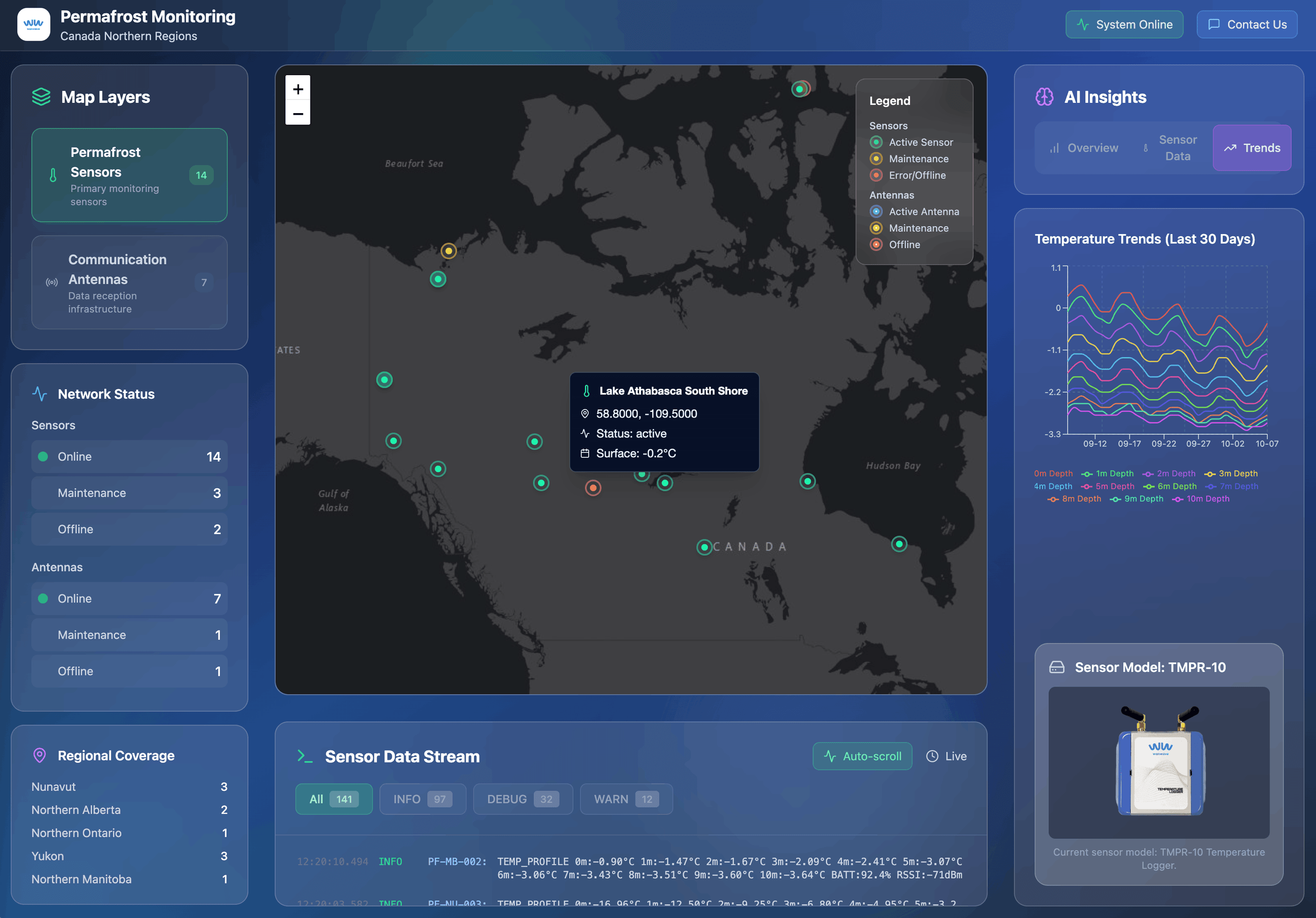
Measure temperatures at multiple depths in each borehole. Cable lengths and measurement spacing are tailored to the deployment, typically at 0.5 or 1 metre intervals.
HISTORICAL TRENDS
Understand change over time
Review temperature histories and compare conditions against available historical baselines to identify warming patterns and seasonal changes.
CONDITION INSIGHTS
Put readings in context
Combine temperature readings with weather data and available soil data to assess changing permafrost conditions and potential risks.
LOCATION COMPARISON
Identify where to look closer
Compare boreholes across a map or corridor view to identify locations that need closer assessment by your team.
INSIGHTS & RESPONSE
Give your team the context to assess changing conditions.
Bring temperature profiles, historical trends and condition insights together to help your team decide where closer investigation is needed.
Set alerts around your monitoring needs
Configure alerts for temperature thresholds at specific depths or changes in assessed ground conditions.
Review the history behind a change
Examine readings over time and compare monitored locations to understand how conditions are developing.
Share findings with your specialists
Export temperature histories and reports for engineering teams and external consultants to support further assessment.
HOW IT WORKS
From measurements at depth to insights your team can use.
Tailor the temperature profile and data collection method to your site, then review changes through the monitoring platform.
01 / MEASURE
Monitor temperatures at depth
Configure sensor cable lengths and measurement depths for each borehole, typically with readings every 0.5 or 1 metre.
02 / COLLECT
Choose how readings reach you
Collect readings through wanwave gateways or Bluetooth readers. Sensors retain measurement history for retrieval between visits, including by readers mounted on passing trains.
03 / ASSESS
Turn changes into informed follow-up
Review profiles, trends and condition insights. Configure alerts and export reports to support your team’s assessments.
INFRASTRUCTURE MONITORING
Follow changing conditions across your infrastructure.
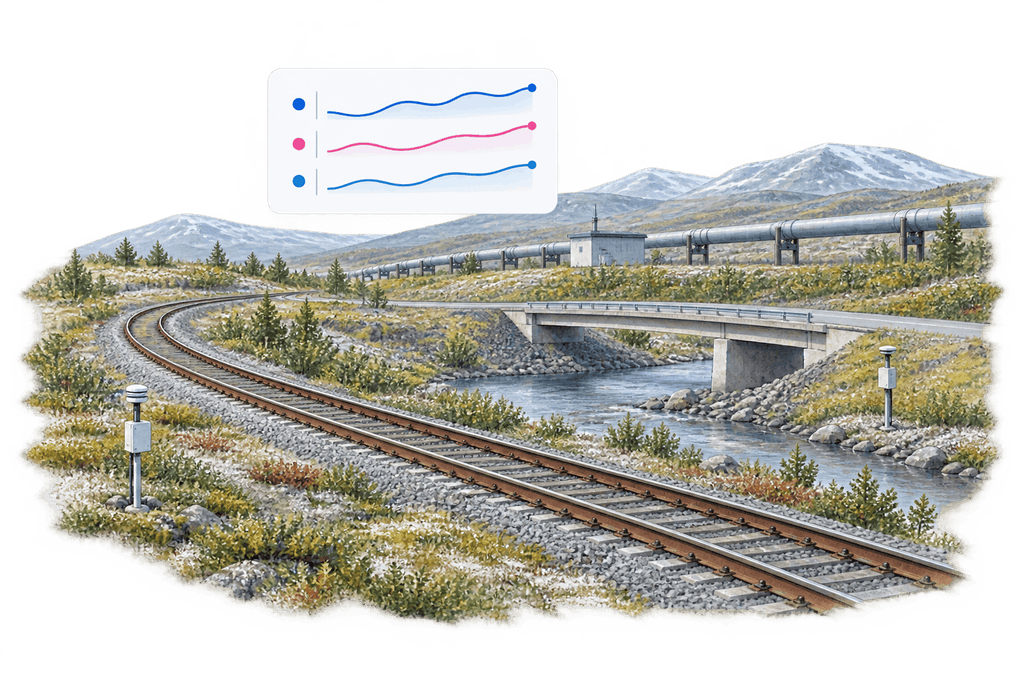
Monitor permafrost beneath and alongside railways, roads, pipelines, bridges and building foundations. Compare temperature profiles across monitored locations to help your team prioritize closer assessment and plan follow-up.
FLEXIBLE DATA COLLECTION
Collect readings in the way your site allows.
Gateway-connected monitoring
Use wanwave gateways to collect temperature readings from compatible loggers and forward them to your monitoring platform.
Bluetooth collection
Retrieve stored temperature histories through Bluetooth readers during site visits or vehicle passes.
What do you need to monitor or protect?
Tell us about your operation, the information you need, and the decisions it should support. We’ll discuss suitable technologies, integration requirements, and a practical next step.