Air Temperature & Humidity Sensor
TMPH-10
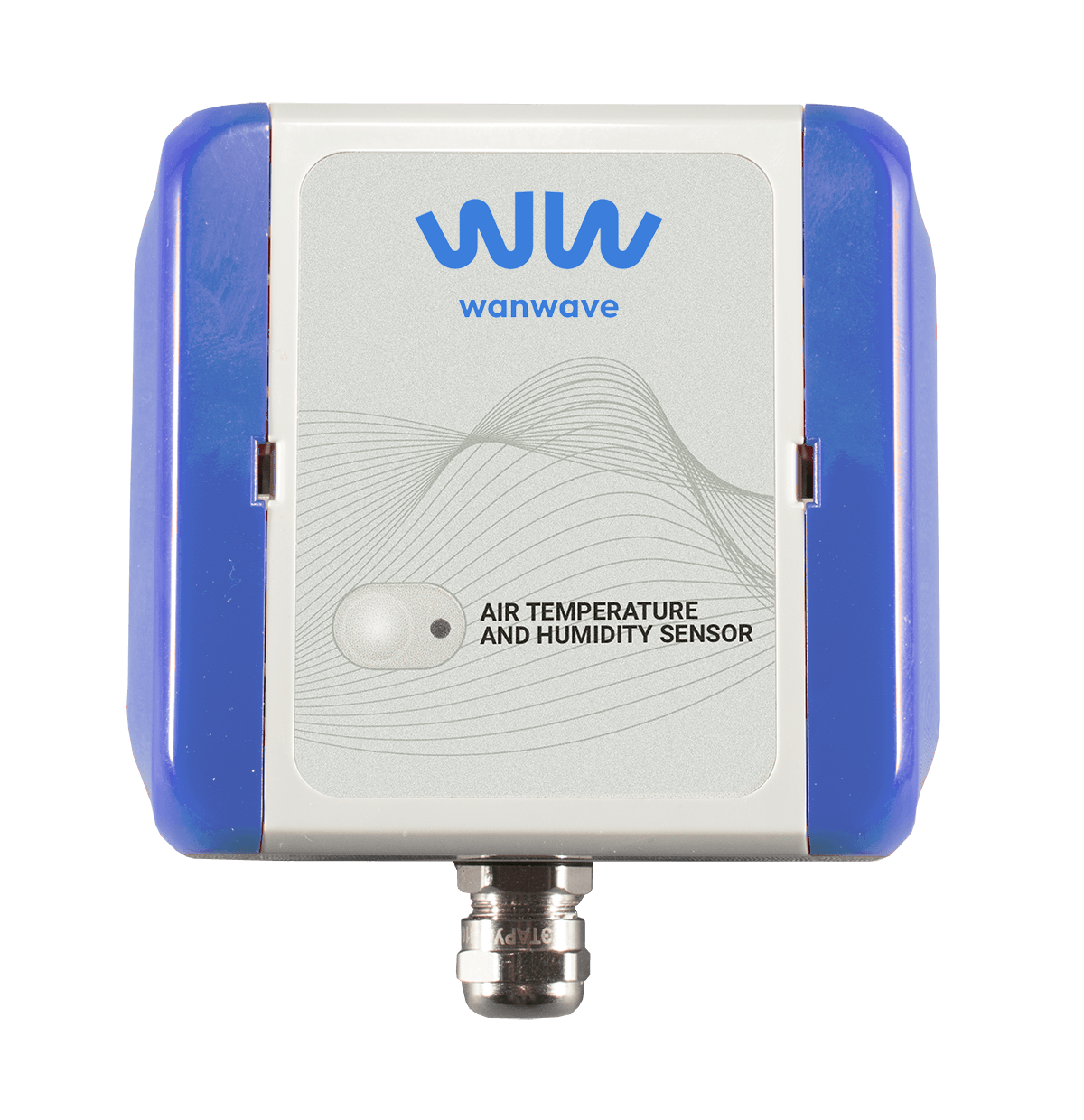
The TMPH-10 measures air temperature and relative humidity and transmits readings over wanwave LPWAN, supporting remote monitoring of environmental conditions. It provides a listed temperature accuracy of ±0.25°C and relative humidity accuracy of ±2%, with BLE available for local configuration.
Powered by a 3.6 V lithium thionyl chloride battery, the sensor has a battery life of ten years and transmission power below 25 mW. Its compact, IP66-rated enclosure measures 89 × 80 × 48 mm and weighs 255 g, making it suitable for installations requiring protection against dust and water jets.
MEASUREMENTS
Temperature, relative humidity
COMMUNICATION
wanwave LPWAN
POWER SUPPLY
3.6 V LiSOCl₂ battery
ENCLOSURE RATING
IP66
Applications

Agriculture
Track temperature and humidity to support healthy crops and resilient operations.
Explore solution →
Buildings
Monitor indoor conditions to support occupant comfort and operational efficiency.
Explore solution →
Museums
Help protect valuable collections with reliable environmental monitoring.
Explore solution →Technical specifications
| Model number | TMPH-10 |
|---|---|
| Measurements | Temperature, relative humidity |
| Measurement accuracy | Temperature: ±0.25°C at -40°C – 70°C Relative humidity: ±2% at -10°C – 85°C |
| Communication interface | wanwave LPWAN |
| Configuration interface | Bluetooth |
| Power supply | 3.6 V LiSOCl₂ battery |
| Enclosure rating | IP66 |
| Operating conditions | -40°C to +80°C |
| Dimensions | 89 × 80 × 48 mm |
| Weight | 255 g |
| Battery life & conditions | 10 years |
Connectivity & integration
TMPH-10 transmits temperature and relative humidity readings over wanwave’s proprietary network to a compatible wanwave gateway. The gateway forwards readings to wanwave’s monitoring platforms or your existing IT systems. Bluetooth is used for device configuration.
Documents
Product datasheet (PDF) →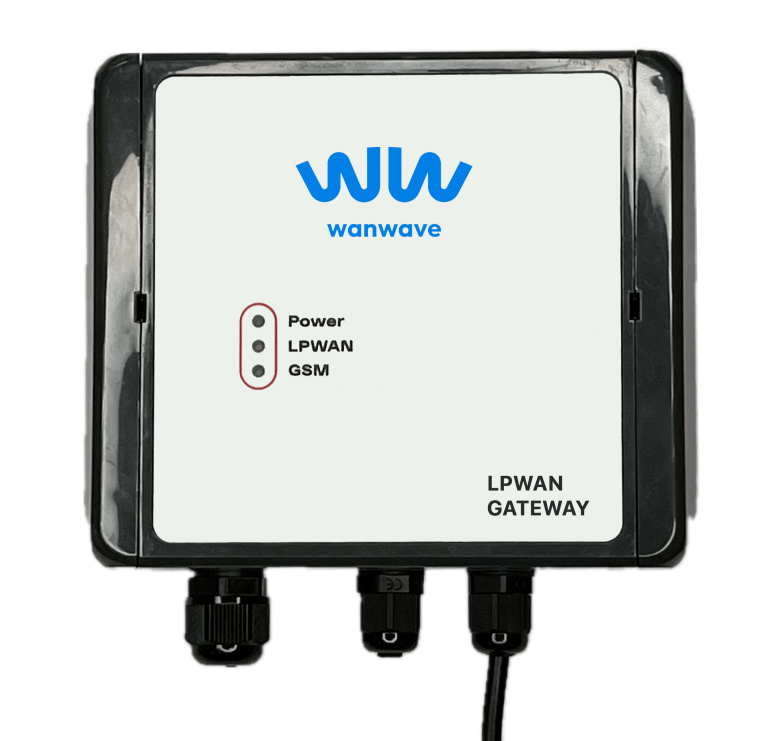
What do you need to monitor or protect?
Tell us about your operation, the information you need, and the decisions it should support. We’ll discuss suitable technologies, integration requirements, and a practical next step.