Ammonia Sensor
NH3S-10
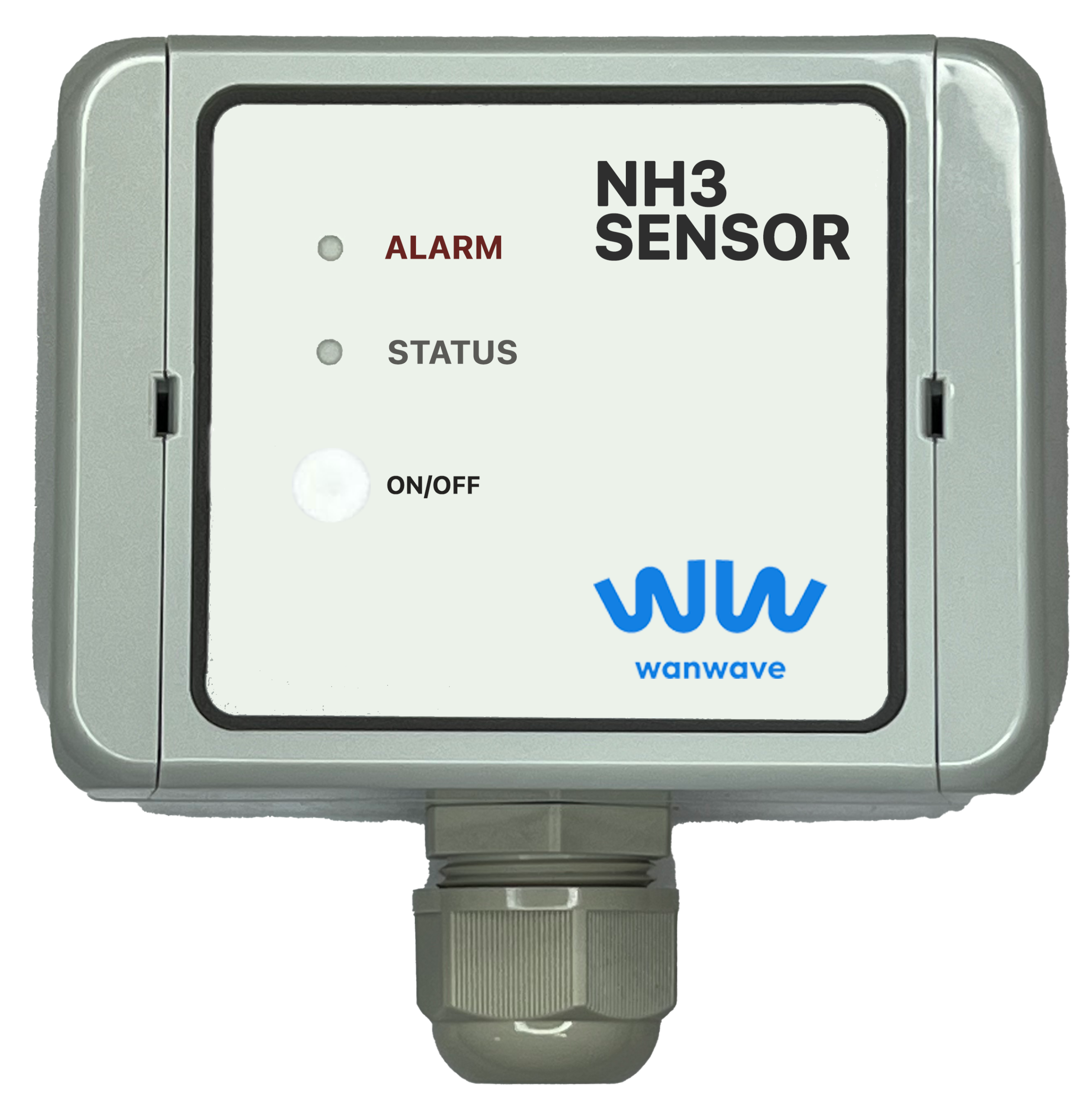
The NH3S-10 measures ammonia concentration and transmits readings over wanwave LPWAN, supporting remote monitoring of conditions where ammonia may be present. It has a specified measurement range of 0–50 ppm and a resolution of 0.5 ppm, with BLE available for local configuration.
Powered by a 3.6 V lithium thionyl chloride battery, the sensor has a battery life of three years and transmission power below 25 mW. Its compact, IP67-rated enclosure measures 125 × 67 × 50 mm and weighs 160 g.
MEASUREMENTS
Ammonia (NH₃) concentration
COMMUNICATION
wanwave LPWAN
POWER SUPPLY
3.6V LiSOCl₂ battery
ENCLOSURE RATING
IP67
Applications

Agriculture
Track temperature and humidity to support healthy crops and resilient operations.
Explore solution →
Buildings
Monitor indoor conditions to support occupant comfort and operational efficiency.
Explore solution →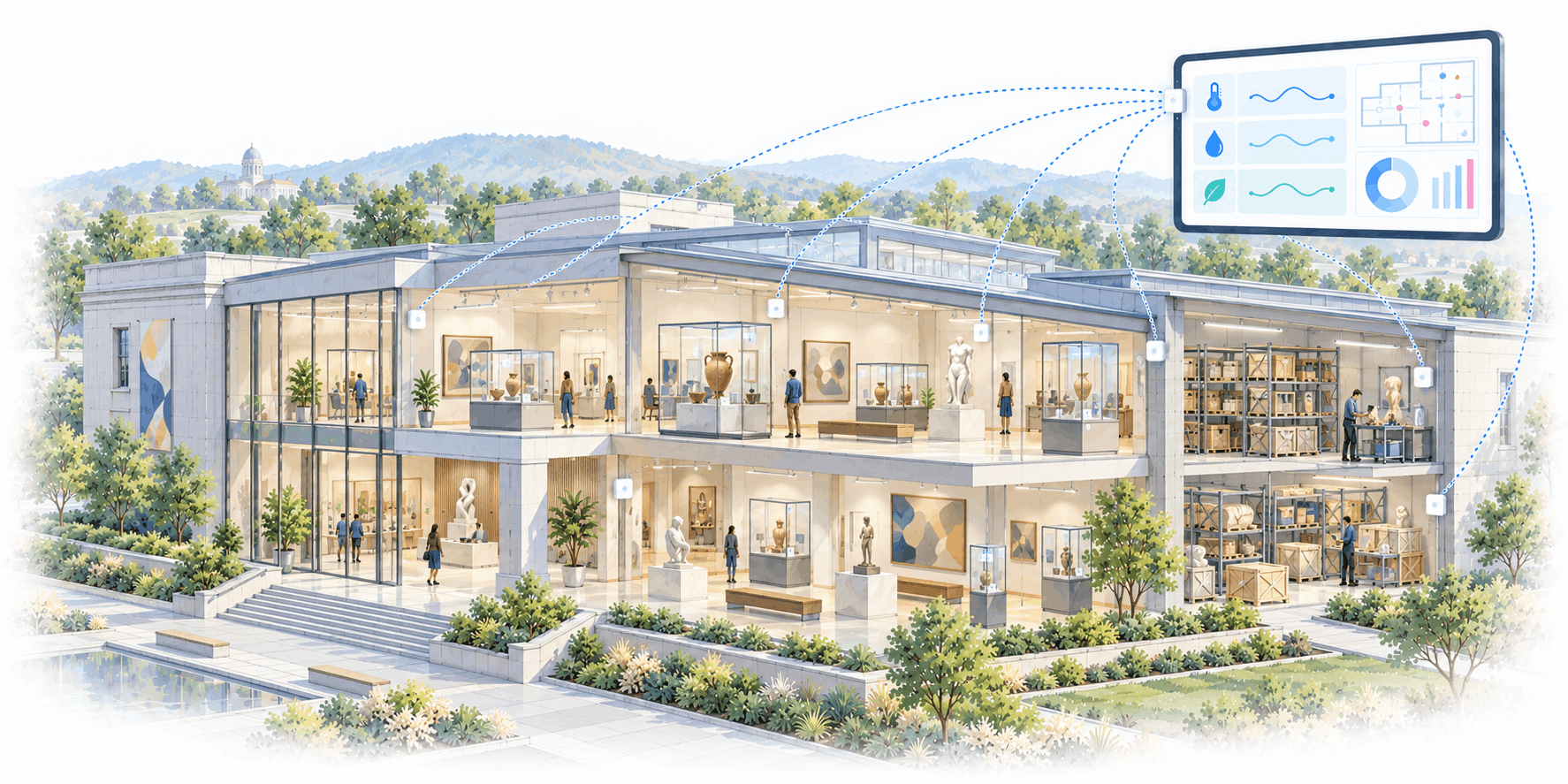
Museums
Help protect valuable collections with reliable environmental monitoring.
Explore solution →Technical specifications
| Model number | NH3S-10 |
|---|---|
| Measurements | Ammonia (NH₃) concentration |
| Measurement accuracy | Max Detecting Concentration: 200ppm Sensitivity: (0.10±0.05)μA/ppm Resolution ratio: 0.5ppm |
| Measurement range | 0–50 ppm |
| Communication interface | wanwave LPWAN |
| Configuration interface | Bluetooth |
| Power supply | 3.6V LiSOCl₂ battery |
| Enclosure rating | IP67 |
| Operating conditions | -10°C to +80°C |
| Dimensions | 125 × 67 × 50 mm |
| Weight | 160 g |
| Battery life & conditions | 3 years |
Connectivity & integration
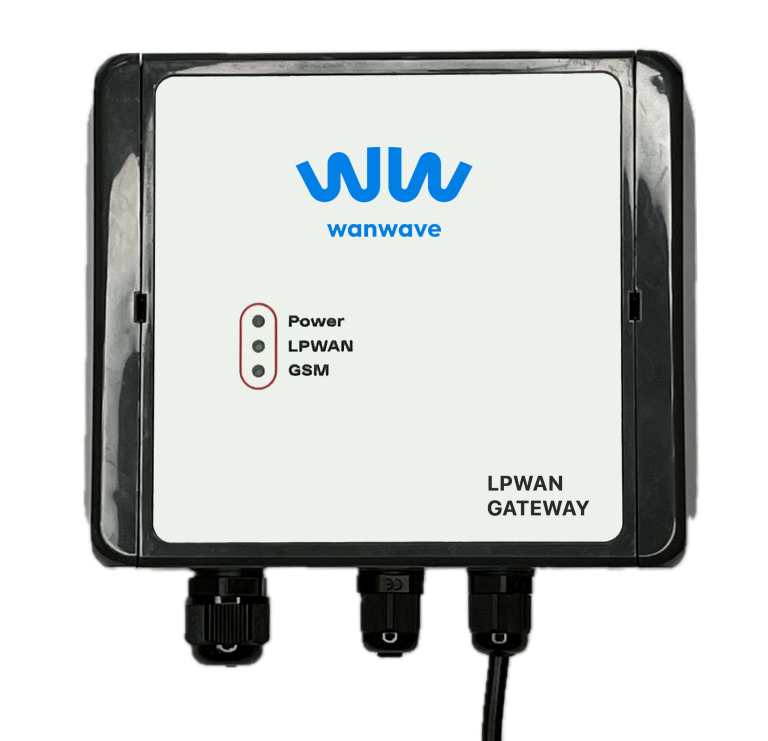
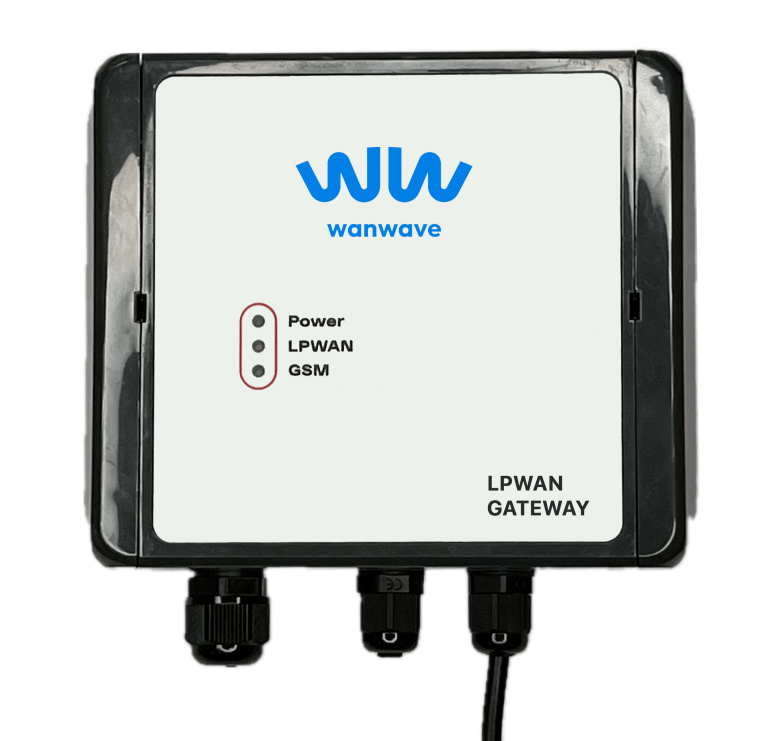
NH3S-10 transmits ammonia concentration readings over wanwave’s proprietary network through a compatible wanwave gateway. The gateway forwards the data to wanwave monitoring platforms or your existing IT systems. The sensor operates on battery power, and Bluetooth is used for configuration.
Documents
Product datasheet (PDF) →
What do you need to monitor or protect?
Tell us about your operation, the information you need, and the decisions it should support. We’ll discuss suitable technologies, integration requirements, and a practical next step.